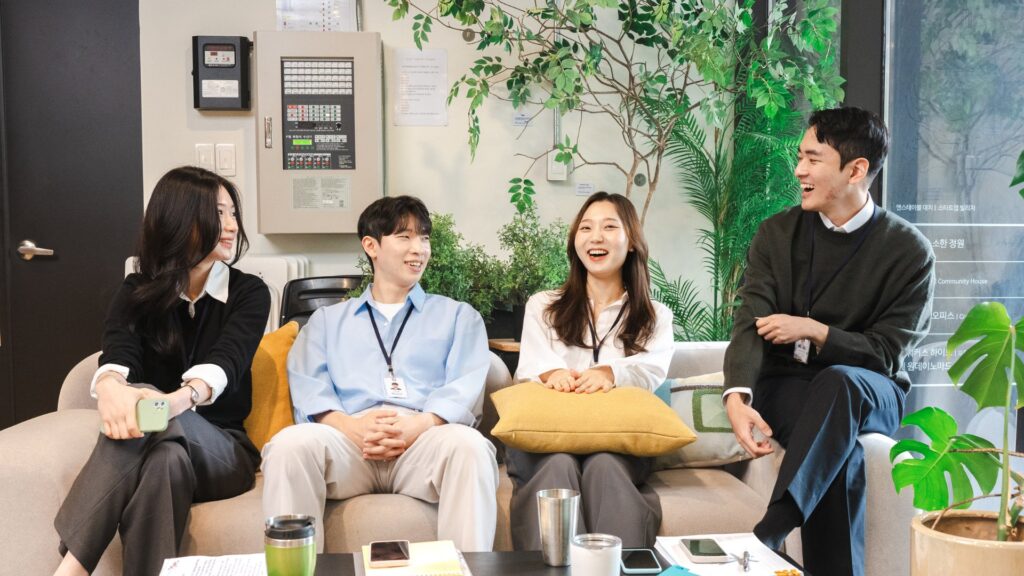
A fun afternoon out doesn’t automatically make a team stronger. Team building activities that actually work give people a reason to communicate, solve problems together, build trust and notice what their colleagues bring to the table. Everything else is just a nice afternoon, pleasant in the moment but forgotten by the following week.
The right activity also depends on who’s in the room. A team of five doesn’t need what a team of fifty does, and a group that leans quiet and thoughtful won’t thrive on the same exercises as one that loves competition. Remote and hybrid teams need their own approach entirely, since the usual physical games simply don’t translate over video.
To make this easier, we’ve organised 50 team building activities into six categories, each built around a different objective: icebreaking, communication, indoor fun, outdoor challenges, virtual formats and, importantly, appreciation and recognition. Every activity below includes what it’s best for, how long it takes and the group size it suits, so you can match one to your team in seconds. Once you’ve had a look through, the framework further down will help you narrow the list down to what your team actually needs.
Quick & Easy Team Building Activities

Ideal for meetings, team lunches or a short break, these activities need almost no preparation and can be run in 5 to 20 minutes.
1. Two Truths and a Lie
Best for: Icebreaking | Time: 10–15 minutes | Group size: 5–20
Each person shares three statements about themselves, with one being false. The rest of the team votes on which statement is the lie. It’s a simple way for colleagues to learn something new about one another and start conversations.
2. Would You Rather?
Best for: Icebreaking, conversation | Time: 10 minutes | Group size: Any
Pose a series of light-hearted, work-appropriate dilemmas and let the team debate their choices out loud. The format is flexible enough for any setting, and the debate itself tends to reveal more personality than the answers do.
3. Team Trivia
Best for: Energy, fun | Time: 15–20 minutes | Group size: 6–30
Run a quick round of general knowledge or company-specific trivia in small teams. It works well as a warm-up before a meeting and gives quieter team members an easy way to contribute without being put on the spot individually.
4. Speed Networking
Best for: Relationship-building | Time: 15–20 minutes | Group size: 8–30
Pair colleagues up for a two-minute chat, then rotate to a new partner. It’s especially useful for larger teams or new starters, since it guarantees everyone gets a moment of one-on-one conversation with people they might not usually speak to.
5. Common Ground
Best for: Connection | Time: 10 minutes | Group size: 4–8 per group
Small groups race to find five things they all have in common, work-related or not. The exercise nudges people past small talk quickly and often uncovers shared interests that never would have come up otherwise.
6. Photo Guessing Game
Best for: Fun, connection | Time: 10–15 minutes | Group size: Any
Ask everyone to submit a childhood photo or an old team photo in advance, then guess who’s who as a group. It’s a low-effort activity that consistently gets a good laugh and helps humanise colleagues people mostly know from meetings.
7. Team Playlist Challenge
Best for: Culture, fun | Time: 5–10 minutes | Group size: Any
Everyone adds three songs to a shared playlist and briefly explains their picks. It’s a lightweight way to learn about people’s personalities outside work, and the playlist itself becomes a nice keepsake for future team events.
Also read: How to Celebrate Employee Appreciation Day: Ideas and Messages
Communication & Collaboration Activities

These activities go beyond entertainment, giving teams genuine practice at listening, coordinating and solving problems together rather than simply having fun.
8. Back-to-Back Drawing
Best for: Communication | Time: 15 minutes | Group size: Pairs
Pairs sit back to back. One person describes a shape or image while the other tries to draw it from verbal instructions alone. The exercise exposes exactly how much gets lost between what someone means and what someone hears.
9. Perfect Square
Best for: Communication, trust | Time: 20–30 minutes | Group size: 8–15
Blindfolded, the team uses a single length of rope to form a perfect square, relying entirely on verbal direction to get there. Without sight, the group has to agree on a shared language for describing position and distance.
10. Human Knot
Best for: Collaboration | Time: 15–20 minutes | Group size: 8–15
The group stands in a circle, reaches across and grabs two different hands, then works out how to untangle itself without letting go. It forces patience and turn-taking, and it rarely goes as quickly as anyone expects.
11. Build the Tallest Tower
Best for: Collaboration, creativity | Time: 20–30 minutes | Group size: 3–5 per team
Small teams race to build the tallest freestanding structure using limited materials such as straws, tape or paper. It’s a fast, visual way to see how a team plans, divides work and handles a shared deadline.
12. Blindfold Navigation Challenge
Best for: Trust, communication | Time: 20 minutes | Group size: Pairs
One blindfolded teammate is guided through an obstacle course using only their partner’s verbal cues. Trust builds quickly when someone’s safety depends on clear, calm direction, which is exactly what makes this one memorable.
13. Collaborative Storytelling
Best for: Creativity, communication | Time: 10–15 minutes | Group size: 5–15
The group builds a story together, one sentence at a time, with no planning allowed. Nobody can predict where it’s going, which keeps people listening closely to what came before rather than planning their own next line.
14. Escape Room Challenge
Best for: Problem-solving | Time: 45–60 minutes | Group size: 4–8 per team
Teams work through a series of linked puzzles together under time pressure to “escape” a themed room. It naturally surfaces who tends to lead, who spots details and who keeps the group calm under pressure.
15. Marshmallow Challenge
Best for: Problem-solving, creativity | Time: 18 minutes | Group size: 3–5 per team
Using only spaghetti, tape and string, teams build the tallest structure that can hold a marshmallow on top. It’s a well-known exercise for good reason: it rewards fast prototyping and early testing over long, careful planning.
Also read: 20+ Peer Recognition Ideas and Tips to Build a Culture of Appreciation
Fun Indoor Team Building Activities

Useful for offices, meeting rooms and rainy days when you want energy in the room without leaving the building.
16. Office Scavenger Hunt
Best for: Energy, fun | Time: 20–30 minutes | Group size: 4–20
Teams race around the office to find or photograph a list of everyday items, from a specific coloured mug to a particular meeting room whiteboard. It’s an easy way to add movement and laughter to an otherwise ordinary day.
17. Jigsaw Puzzle Race
Best for: Collaboration | Time: 20–30 minutes | Group size: 3–5 per team
Give small teams identical puzzles and see who completes theirs first. It’s quieter and more methodical than most indoor games, which makes it a good option for teams that prefer a calmer style of collaboration.
18. Minute-to-Win-It Challenge
Best for: Energy, fun | Time: 30–45 minutes | Group size: Any
Run a series of quick, slightly silly one-minute games using everyday objects, like stacking cups or balancing a spoon. Each round is short enough that even a reluctant participant is usually happy to give it a go.
19. Board Game Tournament
Best for: Fun, connection | Time: 45–60 minutes | Group size: 8–24
Set up a handful of classic board games and run a mini tournament with brackets. It gives people a relaxed, familiar format to bond over and works particularly well for teams who’d rather chat than compete physically.
20. Office Olympics
Best for: Energy, fun | Time: 45–60 minutes | Group size: 10+
Run a series of light-hearted “events” such as desk chair races, paper aeroplane distance throws and rubber band target practice. Themed medals or a scoreboard add a bit of friendly competitive spirit without taking things too seriously.
21. Pictionary
Best for: Creativity, fun | Time: 20–30 minutes | Group size: 6–20
Teams sketch and guess work-related or completely random prompts against the clock. It’s a reliable crowd-pleaser because everyone can join in regardless of drawing ability, and the mistakes are usually funnier than the good drawings.
22. Team Charades
Best for: Fun, communication | Time: 20 minutes | Group size: 6–20
Colleagues act out prompts without speaking while the rest of the team guesses. It’s especially good for breaking down formality between more senior and more junior team members, since everyone looks equally silly.
23. Mystery Box Challenge
Best for: Problem-solving, creativity | Time: 15–20 minutes | Group size: 3–6 per team
Teams are given a sealed box of random items and a task to complete using only what’s inside. Limited resources force creative thinking fast, and the constraint itself tends to produce more interesting solutions than an open brief would.
Outdoor Team Building Activities

Best suited to half or full-day events, when your team has the space and the time to spare.
24. Team Scavenger Hunt
Best for: Collaboration, fun | Time: 45–60 minutes | Group size: 4–20
Teams follow a trail of clues around a park, campus or neighbourhood to find hidden items or complete small challenges. The change of scenery alone tends to loosen people up more than an equivalent indoor activity would.
25. Outdoor Obstacle Course
Best for: Teamwork, energy | Time: 1–2 hours | Group size: 4–8 per team
Book or build a course where certain stages can only be completed as a team, such as carrying something together or helping each other over an obstacle. It’s physical, but the teamwork element matters more than raw fitness.
26. Sports Day
Best for: Energy, morale | Time: Half day | Group size: 15+
Run a mix of classic sports and relay games across mixed teams, ideally reshuffled so people aren’t just playing with their usual desk neighbours. A shared afternoon of good-natured competition tends to carry a lasting boost in mood.
27. Relay Race
Best for: Energy, teamwork | Time: 30–45 minutes | Group size: 4–8 per team
Teams compete across a series of timed relay challenges, from simple running legs to task-based stages like carrying an egg on a spoon. It’s straightforward to organise and easy to scale up or down.
28. Team Picnic
Best for: Relationship-building | Time: 1–2 hours | Group size: Any
A relaxed shared meal outdoors, with plenty of time built in for informal conversation rather than a packed agenda. Sometimes the most valuable team building activity is simply unstructured time together away from a desk.
29. Nature Walk
Best for: Connection, wellbeing | Time: 30–60 minutes | Group size: Any
A guided or informal walk that gives colleagues space to talk without a screen or a meeting agenda in front of them. Conversations that happen side by side, rather than across a table, often feel a little more honest.
30. Outdoor Treasure Hunt
Best for: Collaboration, fun | Time: 45–60 minutes | Group size: 4–20
Teams follow map-based clues to find a hidden prize, working through riddles or landmarks along the way. It combines light physical activity with problem-solving, which suits teams who find pure trivia or pure sport a bit one-note.
31. Community Volunteering
Best for: Purpose, connection | Time: Half or full day | Group size: Any
Spend the day volunteering together for a cause the team cares about, whether that’s a local charity, an environmental clean-up or a community programme. It gives the group a shared sense of purpose that a purely social event can’t quite match.
Virtual & Hybrid Team Building Activities

With more teams working remotely or across locations, these formats keep connections alive without needing everyone in the same room. It’s worth building in asynchronous options too, so distributed teams and different time zones aren’t left out.
32. Virtual Trivia
Best for: Remote engagement | Time: 15–20 minutes | Group size: Any
Run a trivia session over video call using a shared quiz tool, splitting the group into breakout teams. It’s one of the easiest virtual activities to organise and works well as a regular, recurring fixture.
33. Online Scavenger Hunt
Best for: Remote engagement, fun | Time: 15–20 minutes | Group size: Any
Give everyone a short list of items to find at home within a set time limit, then have them show what they found on camera. It’s a good option for injecting energy into an otherwise routine video call.
34. Virtual Escape Room
Best for: Problem-solving | Time: 45–60 minutes | Group size: 4–8 per team
Teams solve a digital escape room together in real time, working through puzzles over a shared screen. It gives remote teams the same collaborative problem-solving experience as an in-person escape room, without anyone needing to travel.
35. Virtual Show and Tell
Best for: Connection | Time: 15–20 minutes | Group size: Any
Each person shares an object that means something to them, on camera, and explains why. It’s a simple, low-pressure way for colleagues to learn something personal about each other, particularly useful for newer or fully distributed teams.
36. Online Pictionary
Best for: Fun, creativity | Time: 20 minutes | Group size: 6–20
Play Pictionary using a shared digital whiteboard instead of paper. It brings the same energy as the in-person version and needs nothing more than a video call and a drawing tool everyone can access.
37. Virtual Coffee Roulette
Best for: Relationship-building | Time: 15–20 minutes | Group size: Pairs
Randomly pair colleagues for an informal video chat each week, with no agenda beyond getting to know one another. Over time, it quietly builds relationships across teams that would otherwise never have a reason to interact.
38. Remote Lunch & Learn
Best for: Connection, learning | Time: 30–45 minutes | Group size: Any
Combine a casual virtual lunch with a short, informal presentation from a team member on a topic they know well. It gives people a reason to log on that isn’t strictly work, while still building connection and shared knowledge.
39. Virtual Team Talent Show
Best for: Fun, culture | Time: 30–45 minutes | Group size: Any
Colleagues share a skill or talent over video, from cooking to music to an unusual hobby. It’s consistently one of the most memorable virtual formats, precisely because it shows a side of people rarely revealed through work.
Appreciation & Recognition Team Building Activities

Recognition shouldn’t be an afterthought tacked onto the end of an event. These activities put appreciation at the centre, and each one pairs naturally with a peer recognition platform like CERRA Applause, so the moment doesn’t end when the activity does.
40. Peer Appreciation Circle
Best for: Recognition, connection | Time: 10–15 minutes | Group size: Any
Everyone shares one thing they appreciate about another team member, out loud or written down. You can also encourage employees to turn what they said into a peer recognition message or eCard through CERRA Applause, so the moment isn’t lost once the meeting ends.
41. Caught Doing Something Great
Best for: Recognition | Time: Ongoing, weekly | Group size: Any
Throughout the week, colleagues nominate people they’ve noticed helping, collaborating or going above and beyond. Turning those nominations into points or rewards through CERRA Applause keeps the habit visible and gives it a reason to continue past the first week.
42. Team MVP Awards
Best for: Recognition, morale | Time: 20–30 minutes | Group size: Any
Create a few fun categories, such as Best Collaborator, Problem Solver of the Month or Most Supportive Teammate. Employees nominate and vote for one another, and CERRA Applause lets winners be recognised and rewarded through the platform afterwards.
43. Values Champion Challenge
Best for: Recognition, culture | Time: 20–30 minutes | Group size: Any
Give teams a list of your company values and ask them to identify examples of colleagues demonstrating each one recently. It’s a practical way to recognise employees who best represent your culture, rather than leaving values as words on a wall.
44. Thank-You Wall
Best for: Recognition, connection | Time: Ongoing | Group size: Any
Set up a physical or digital wall where employees leave short thank-you messages for colleagues. CERRA Applause takes the same idea beyond the event itself, giving the team a way to keep peer appreciation running digitally, all year round.
45. Recognition Relay
Best for: Recognition | Time: 15 minutes | Group size: Any
One employee recognises a colleague for something specific, and that person then recognises someone else, creating a chain of appreciation across the team. Used through CERRA Applause, that same chain can keep peer recognition moving long after the activity is over.
46. Team Wins Celebration
Best for: Recognition, morale | Time: 15–20 minutes | Group size: Any
Ask each team to share a recent achievement and name the people who contributed to it. CERRA Applause makes it easy to recognise those specific individuals or teams behind a milestone, rather than letting a win go quietly unacknowledged.
47. Appreciation Bingo
Best for: Recognition, fun | Time: Ongoing, weekly | Group size: Any
Create a bingo card with squares like “helped a teammate,” “shared useful knowledge” or “gave useful feedback,” and have employees complete squares over the week. Each completed square becomes a natural prompt to send recognition through CERRA Applause.
48. Unsung Hero Awards
Best for: Recognition | Time: 15–20 minutes | Group size: Any
Ask employees to nominate someone whose contribution often goes unnoticed. This one works particularly well through CERRA Applause, since it reinforces that recognition shouldn’t only go to top performers, but also to the people who quietly make collaboration possible.
49. Recognition Storytelling
Best for: Recognition, connection | Time: 15–20 minutes | Group size: Any
Ask employees to share a short story about a colleague who made their work easier, better or more enjoyable. The emphasis should stay on specific behaviour and impact rather than generic compliments, which is what makes the story worth telling.
50. Team Appreciation Awards
Best for: Recognition, morale | Time: 20–30 minutes | Group size: Any
End a team-building event with recognition categories chosen specifically for your team, such as Best Team Player, Most Creative Thinker or Culture Champion. With CERRA Applause, that recognition becomes part of an ongoing programme rather than something limited to the one event.
Also read: Point Reward System for Employees: How It Works, Benefits & Best Practices
How to Choose the Right Team Building Activity
With 50 options on the table, a simple framework makes the choice easier. Start with your objective, since that alone narrows the list considerably.
| Objective | Activities to consider |
| Build trust | Two Truths and a Lie, Perfect Square |
| Improve communication | Back-to-Back Drawing, Blindfold Navigation Challenge |
| Encourage collaboration | Escape Room Challenge, Build the Tallest Tower |
| Improve problem-solving | Mystery Box Challenge, Marshmallow Challenge |
| Strengthen relationships | Team Picnic, Virtual Coffee Roulette |
| Recognise employees | Peer Appreciation Circle, Team MVP Awards |
| Engage remote teams | Virtual Trivia, Online Scavenger Hunt |
Team size matters just as much. Small teams of 5 to 10 people do well with anything conversational, where everyone gets a turn to speak. Medium teams of 10 to 30 tend to suit structured games with clear rules, and large teams of 30 or more usually need activities that split naturally into smaller groups, rather than one single exercise trying to hold everyone’s attention at once.
Time available shapes the choice too. If you’ve only got 5 to 15 minutes, stick to icebreakers. Give yourself 15 to 30 minutes for office games and recognition activities, 30 to 60 minutes for problem-solving exercises, and reserve a half or full day for outdoor events and volunteering, which need more setup and travel time built in.
Finally, think about accessibility and personality types. Not every activity should be physical or competitive, and defaulting to that format again and again risks quietly excluding people. Some employees prefer quieter, lower-stakes formats, others have sensory or mobility needs, and remote workers need options that don’t assume everyone’s in the same physical room. A good mix, across formats and intensity, means nobody’s left out by design.
Why Team Building Activities Matter
The value of team building rarely shows up in the activity itself. It shows up afterwards, in how people work together once the game or the walk or the trivia round is over.
Communication tends to improve first. Activities that force people to describe, listen and clarify carry that habit back into everyday meetings, where miscommunication usually costs the most time. Collaboration follows a similar pattern: teams that have solved a small, low-stakes problem together find it easier to trust each other with a bigger one later.
Trust and morale move together too. When people feel comfortable enough to be a little silly or a little vulnerable in front of colleagues, that same comfort tends to show up when it’s time to ask for help or admit a mistake at work. Relationships across teams strengthen in the same way, especially when activities deliberately mix people who wouldn’t normally work together.
Recognition and appreciation deserve their own mention, since they’re often left out of the conversation entirely. Activities built around noticing and thanking colleagues give people a reason to pay closer attention to each other’s contributions, not just their own. Taken together, all of this feeds into something bigger: genuine employee engagement, the kind that shows up in how people actually work, not just how they felt on the day.
How to Make Team Building Activities More Meaningful
- Give every activity a clear purpose
Don’t organise something simply because it’s fun. Decide whether you’re trying to improve communication, build relationships, encourage collaboration or recognise employees, and choose the activity to match. A clear purpose also makes it much easier to tell afterwards whether the activity actually worked.
- Make participation inclusive
Offer a mix of formats rather than relying entirely on competitive or physical games, so people with different comfort levels, abilities and working arrangements can all take part. Inclusion is easier to design in from the start than to fix after someone’s been left out.
- Mix fun with appreciation
A team event doesn’t have to end when the game ends. Build in a few minutes at the close of any activity for people to recognise whoever helped, contributed or made the experience better, so appreciation becomes a normal part of the event rather than a separate occasion.
- Recognise specific behaviours
“Great job” doesn’t say very much on its own. Encourage employees to explain what someone actually did and why it mattered, since specific recognition is what people remember and what actually reinforces the behaviour you want to see more of.
- Keep recognition going after the activity
Team building creates moments for employees to connect, but recognition is what helps those moments become part of your everyday culture, rather than a one-off memory from a single afternoon. A peer recognition platform such as CERRA Applause gives employees a simple way to continue recognising colleagues once the team event is over. CERRA Applause supports peer appreciation through personalised messages, eCards and points, alongside team nominations and rewards, so the good habits an event builds don’t have to fade once everyone’s back at their desks.
Bring Team Building Into Everyday Recognition
Team building doesn’t have to end when the activity is over. Give employees an easy way to recognise the colleagues who make collaboration, teamwork and great work possible, every single day, not just on the day of the event.
With CERRA Applause, employees can recognise their peers with personalised messages, eCards, points and rewards, helping turn occasional team-building moments into an ongoing culture of appreciation that outlasts any single afternoon.
Discover CERRA Applause, start conversations now.