Annual employee engagement surveys can give HR teams a broad picture of how employees feel, but workplace sentiment can change much faster than once a year. Between those annual check-ins, a lot can shift: a reorganisation, a new manager, a change in workload, a shift in morale that nobody flagged in time. An employee pulse survey gives organisations a simpler way to check in regularly, identify emerging concerns and understand whether engagement initiatives are making a difference.
Think of it less as a report card and more as a regular temperature check. It’s short, it’s frequent, and it’s built to catch changes while there’s still time to act on them.
Need a quick starting point?
Download our employee pulse survey template with ready-to-use questions for measuring employee engagement and workplace sentiment.
What Is an Employee Pulse Survey?
An employee pulse survey is a short survey designed to capture employee sentiment. Unlike a comprehensive annual engagement survey, it’s conducted much more frequently, whether that’s weekly, monthly or quarterly, and it’s usually focused on a particular topic or a small set of topics rather than trying to cover everything at once.
Because it’s short, it’s built to be repeated. That repetition is what makes it valuable: a single score tells you very little, but a pattern of scores over weeks or months tells you whether things are improving, stalling or getting worse. Most pulse surveys take only a few minutes to complete, which is precisely why employees are willing to answer them again and again.
What can an employee pulse survey measure?
A pulse survey can measure almost any aspect of the employee experience, including:
- Employee engagement
- Job satisfaction
- Workload and stress
- Manager support
- Communication
- Recognition
- Belonging
- Well-being
- Organisational change
- Employee sentiment toward a new initiative
That’s a long list, and it’s worth saying clearly: one pulse survey doesn’t need to measure all of it. Trying to cram every topic into a single check-in defeats the purpose. A good pulse survey picks one or two areas and asks about them consistently.
Why Use Employee Pulse Surveys?
Get more timely employee feedback
Annual surveys can show you where employees stand at one point in time. Pulse surveys let you check whether sentiment is changing, week to week or month to month, so you’re not relying on a single snapshot taken once a year.
Identify issues earlier
Regular check-ins can help HR identify emerging concerns around workload, management, communication or engagement before they become larger problems. A dip that shows up in a monthly pulse survey is far easier to address than one that only surfaces in next year’s annual results.
Track changes over time
This is where pulse surveys really earn their place. If an organisation introduces a new recognition initiative, pulse surveys can help track whether employees feel more recognised over the following months. Without that ongoing measurement, you’re left guessing whether an initiative actually worked or just felt like it should have.
Give employees a regular channel for feedback
Employees have an easier way to share what is working and what needs attention. Rather than waiting for the one annual moment when their voice is formally invited, they get a steady, low-effort outlet.
Support more informed decisions
The value isn’t the survey score itself. It is what HR and managers do with the information. A pulse survey that never leads to a decision or a change is just data collection for its own sake.
Employee Pulse Survey vs Annual Engagement Survey
Pulse surveys are sometimes mistaken for smaller versions of the annual engagement survey. They’re not. They serve a different purpose, and that difference shapes everything else, from question design to frequency.
| Pulse Survey | Annual Engagement Survey | |
| Frequency | Weekly, monthly or quarterly | Usually once a year |
| Length | Short, often 3–10 questions | More comprehensive |
| Focus | Specific topics or current sentiment | Broad employee experience |
| Purpose | Monitor changes and identify emerging issues | Establish a broader baseline |
| Time to complete | Usually a few minutes | Longer |
| Best used for | Regular check-ins and tracking initiatives | Deep assessment and planning |
Pulse surveys work best alongside broader employee surveys, rather than replacing them. The annual survey gives you the map; the pulse survey tells you whether you’re still heading in the right direction.
Also read: 50 Employee Engagement Survey Questions HR Teams Should Ask
What Should You Ask in an Employee Pulse Survey?
The questions you ask should depend on the objective. Don’t create a generic 20-question survey and call it a pulse survey; that just recreates the annual survey at a higher frequency, which defeats the point and accelerates survey fatigue.
Employee engagement questions
- I feel motivated to do my best work.
- I feel engaged in my day-to-day work.
- I would recommend this organisation as a good place to work.
Recognition questions
- I feel recognised when I do good work.
- I receive meaningful recognition for my contributions.
- People on my team regularly recognise each other’s contributions.
Manager and leadership questions
- My manager listens to my concerns.
- I receive useful feedback from my manager.
- I understand how my work contributes to organisational goals.
Workplace and team questions
- I feel supported by my team.
- I feel comfortable sharing my ideas and concerns.
- I feel a sense of belonging at work.
Well-being and workload questions
- My current workload is manageable.
- I have enough support to maintain my well-being at work.
- I am able to maintain a healthy balance between work and personal commitments.
Open-ended pulse survey questions
Closed-ended questions are useful for tracking scores over time, but pairing them with open-ended questions captures the qualitative detail behind the numbers.
- What is one thing we could do to improve your experience at work?
- What is working particularly well right now?
- Is there anything you’d like leadership to know?
How to Create an Employee Pulse Survey
Creating an effective employee pulse survey starts with having a clear purpose. The goal is to gather useful feedback without making the survey feel like another time-consuming task for employees.
1. Define what you want to learn
Start with a specific question or problem the survey should help you understand. For example, “We want to understand whether employees feel recognised for their contributions” gives you a clearer direction than “We want to measure employee engagement.”
A focused objective helps you write relevant questions and makes it easier to decide what action to take afterwards. Avoid asking about areas you have no intention or ability to address, as this can reduce trust in future surveys.
2. Choose your target audience
Decide who needs to provide feedback. Your survey might go to the entire organisation, a specific department, managers, new employees, or employees affected by a particular change.
A more focused audience can help you gather feedback that is relevant to a specific situation or initiative. If you are tracking results across different groups, make sure the groups are large enough to protect anonymity where appropriate.
3. Keep it short and focused
Aim for around 10 to 15 questions, depending on the topic and audience. A pulse survey should feel like a quick check-in rather than another annual engagement survey.
Prioritise the questions that directly relate to your objective. When tracking sentiment over time, keep a few core questions consistent between surveys so you can make meaningful comparisons.
4. Choose the right questions
Use a mix of question types, including rating or Likert scales, multiple choice, yes/no questions and one or two open-ended questions.
Closed-ended questions make results easier to measure and compare, while open-ended questions give employees space to explain their answers. Keep questions clear, neutral and specific. Avoid combining multiple ideas into one question.
5. Set a realistic survey cadence
There is no universal frequency for pulse surveys. Consider how quickly the topic changes, how often you can act on feedback and the risk of survey fatigue.
For example, a short-term change may warrant more frequent check-ins, while broader engagement measures may be better suited to a monthly or quarterly cadence. The more frequently you survey, the more important it is to have the capacity to respond.
6. Be clear about anonymity and purpose
Before sending the survey, explain why you are asking, how long it will take, whether responses are anonymous and how the feedback will be used.
Most importantly, close the feedback loop. Share relevant findings with employees, communicate what you plan to do and follow up with another survey when appropriate. A useful cycle is survey, analyse, act, communicate, then survey again. Employees are more likely to participate when they can see that their feedback leads to meaningful action.
Also read: How to Improve Work Performance: 8 Strategies for Organizations and Leaders
What to Do After an Employee Pulse Survey
Analyse the results
Look at overall scores, changes from previous surveys, recurring themes, differences between teams or groups, positive areas worth reinforcing, and areas that require action.
Prioritise one or two areas for action
Don’t try to fix everything at once. A focused response to one or two issues will do more than a scattered attempt at all of them.
Communicate what you heard
Share the broad findings with employees, even the less flattering ones. It signals that the survey led somewhere.
Recognise positive contributions
If employees consistently highlight teamwork, helpful colleagues or strong managers as positive aspects of their experience, organisations can reinforce these behaviours through recognition. That feedback is telling you exactly what’s already working, which is just as valuable as knowing what isn’t.
Turn employee feedback into recognition
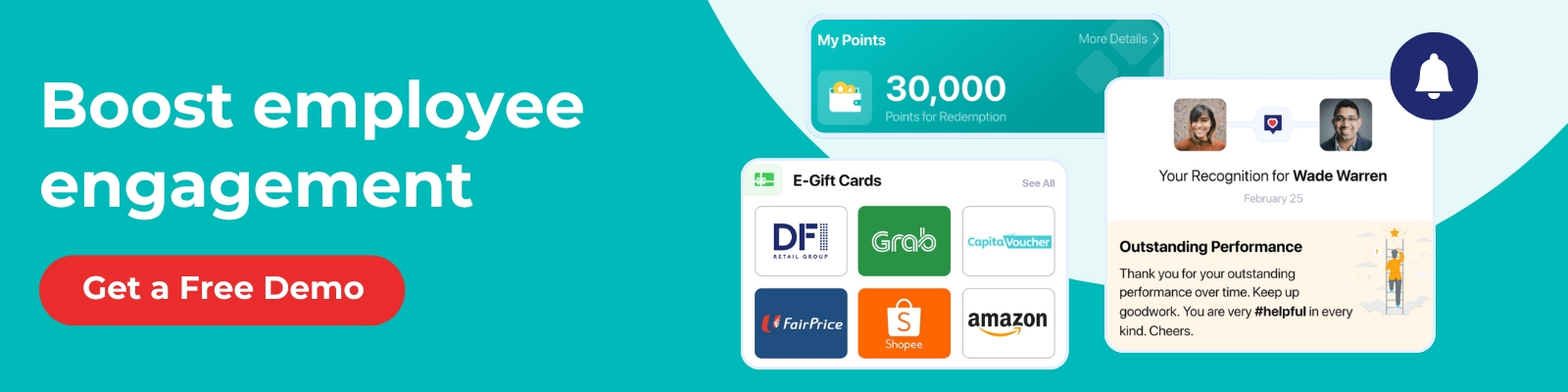
Pulse survey feedback can identify behaviours and contributions worth reinforcing, while recognition platforms can give organisations a way to make appreciation part of the everyday employee experience.
CERRA Applause supports peer appreciation, nominations, personalised recognition, points and rewards, while its analytics can help organisations understand recognition and engagement patterns alongside the sentiment data from your pulse surveys.
Want to build a more consistent culture of recognition?
Explore how CERRA Applause can help your organisation recognise employees and reinforce the behaviours that matter.
Free Employee Pulse Survey Template
Not sure where to start? Download our ready-to-use employee pulse survey template to quickly gather feedback on employee engagement, recognition, workplace experience and more.
The template includes:
- Ready-to-use pulse survey questions
- Questions covering key areas of employee experience
- Rating-scale and open-ended questions
- A practical structure that can be adapted to your organisation
Get your free employee pulse survey template: